
Educational Resources
in Eye Pathology
in Eye Pathology



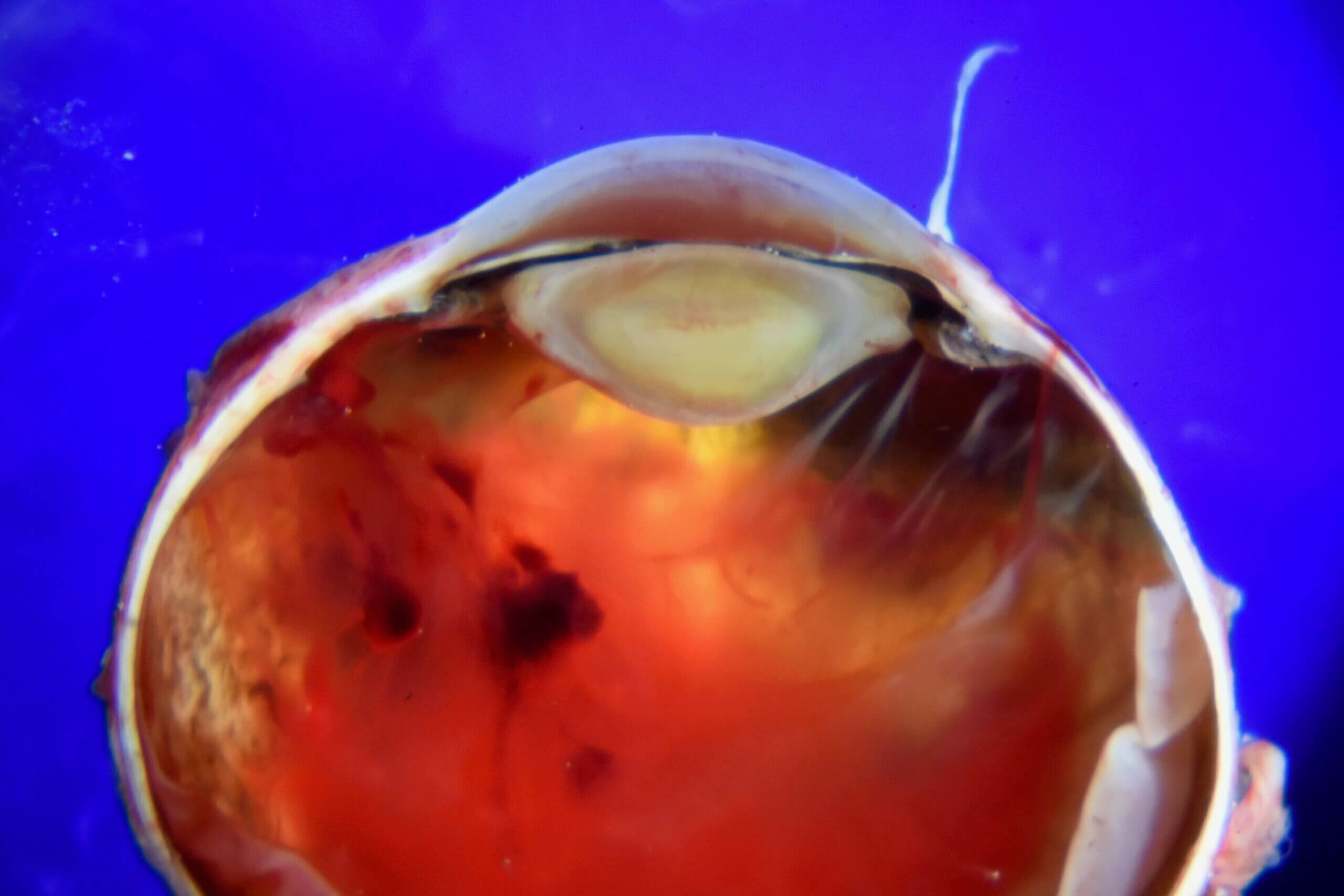
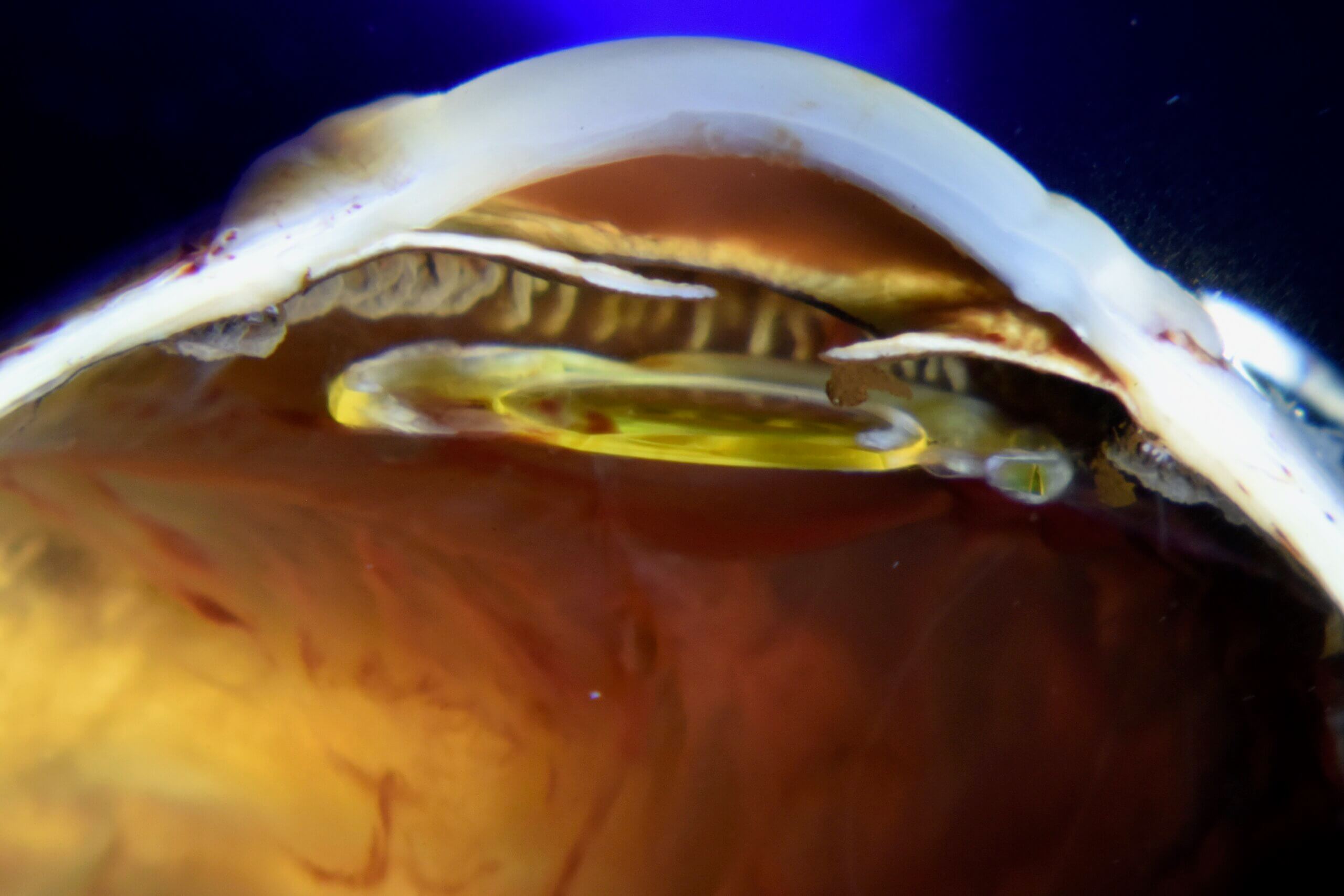
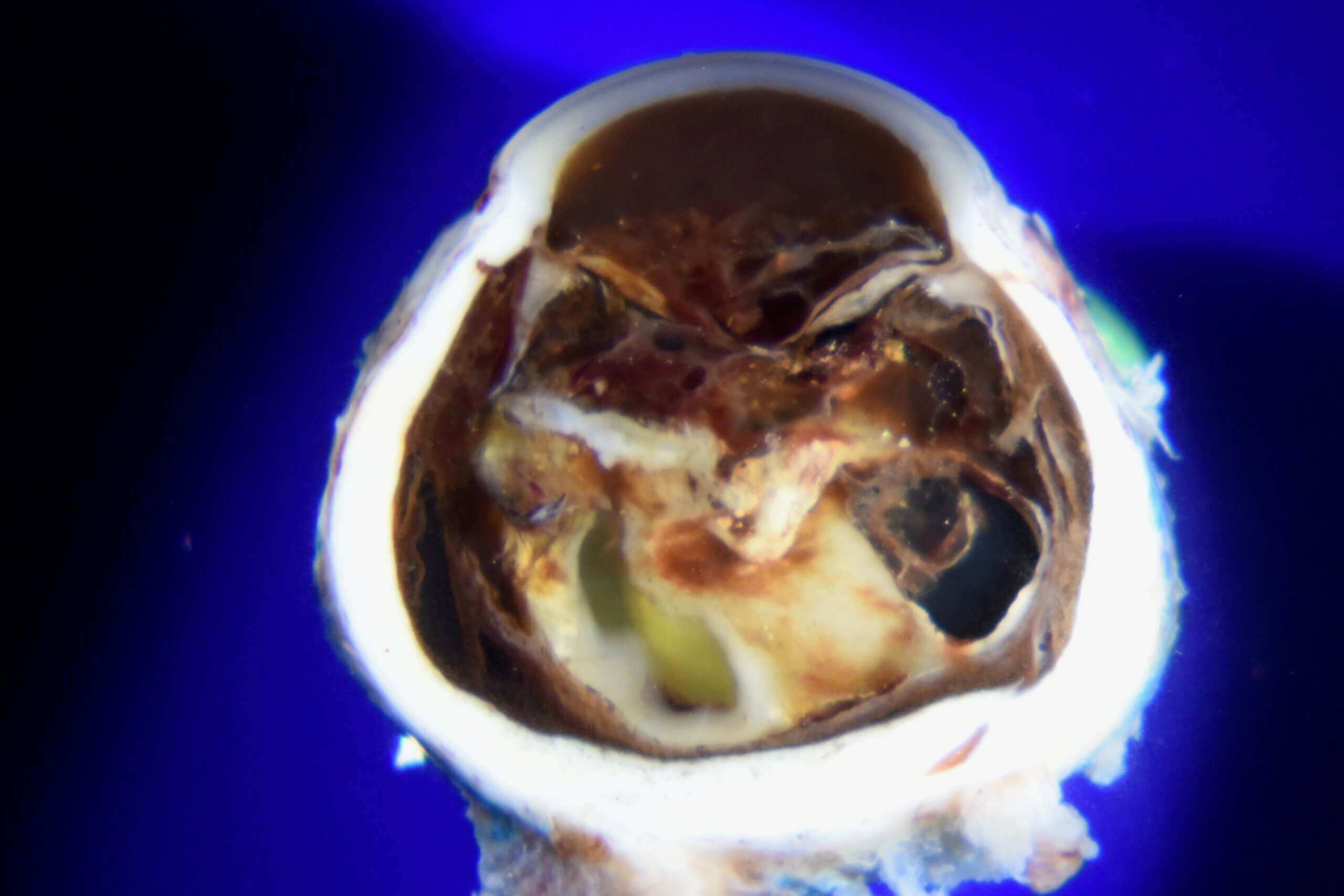
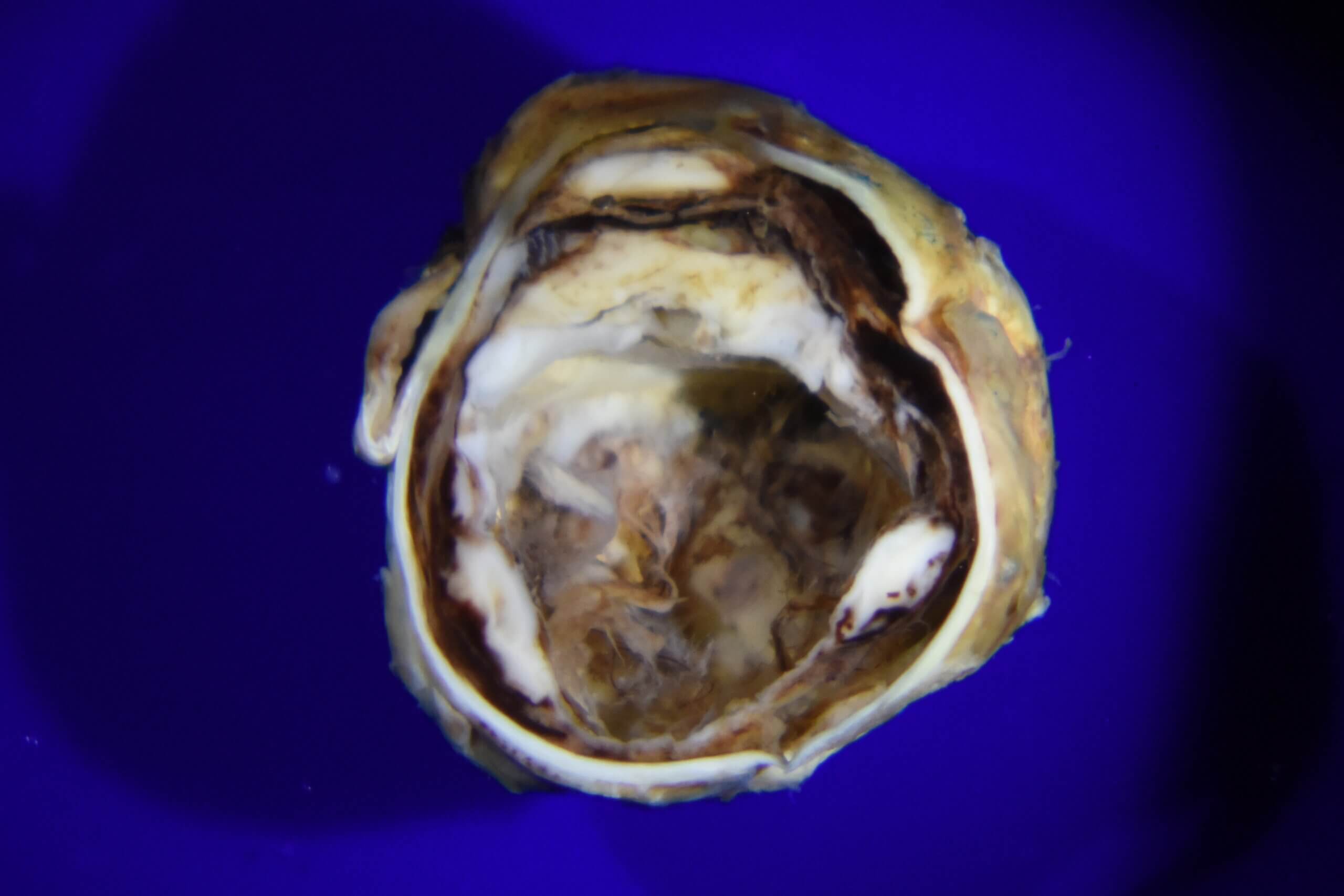

Dr. Patricia Perez Cuesta
Editor


Presentation
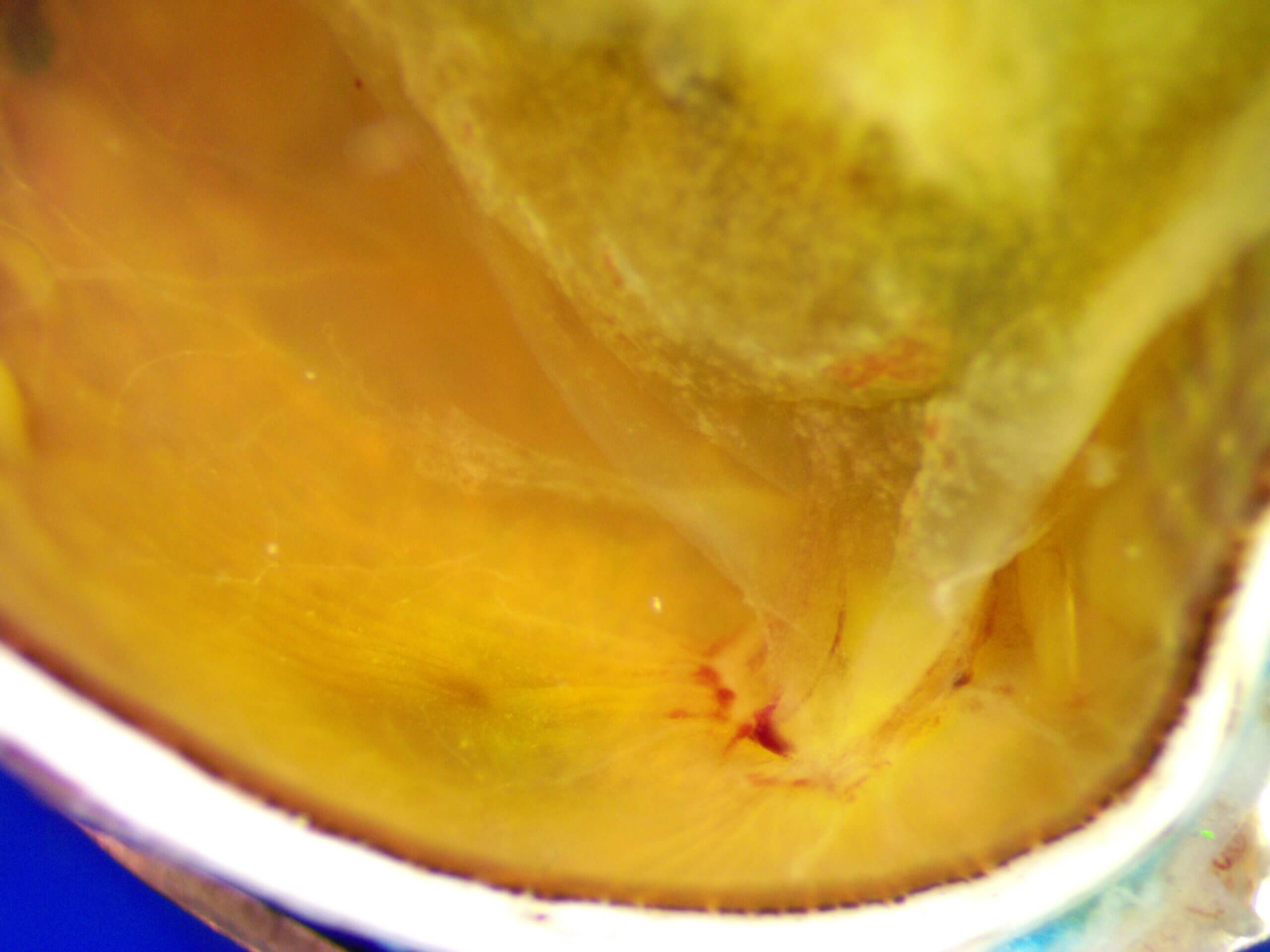
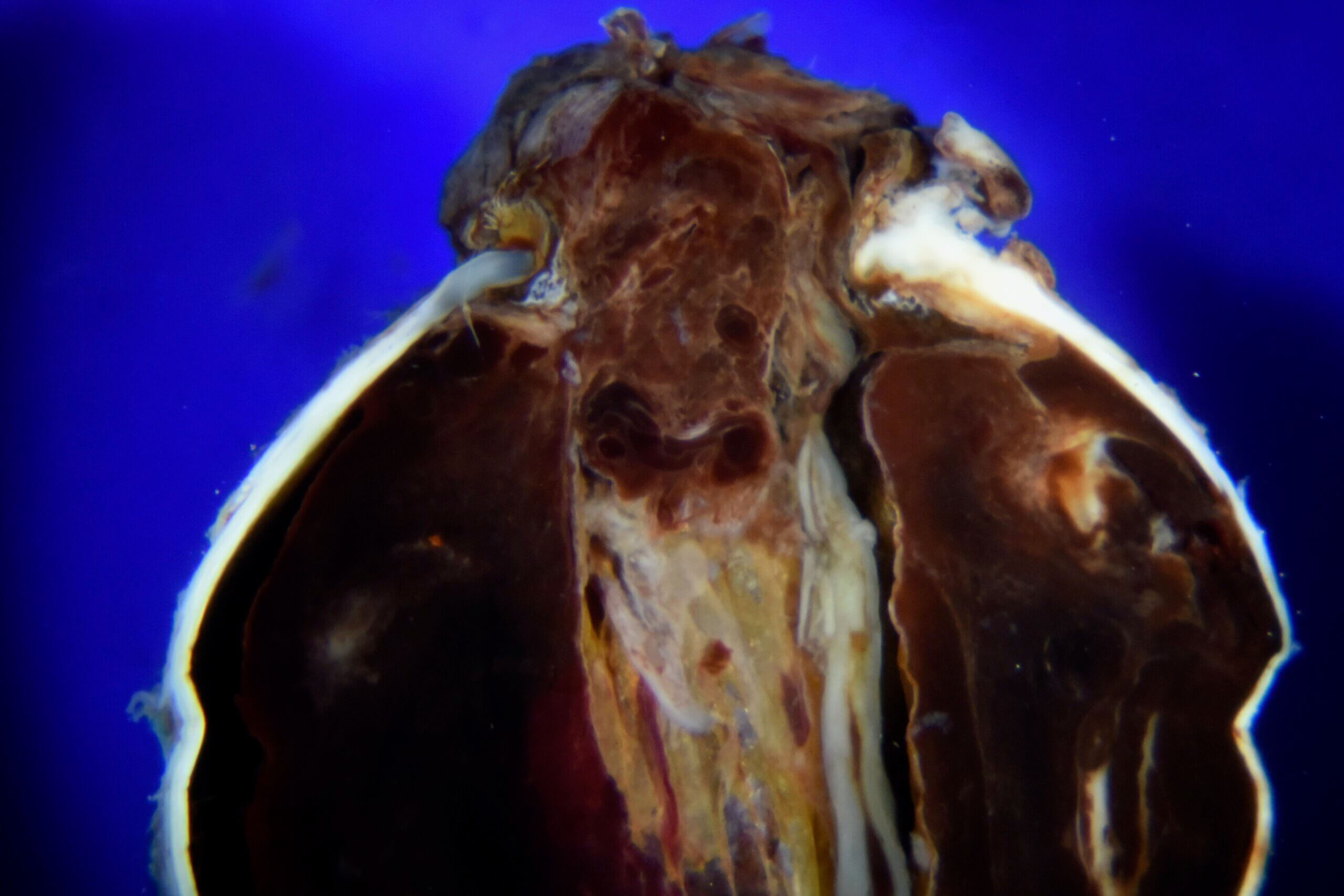
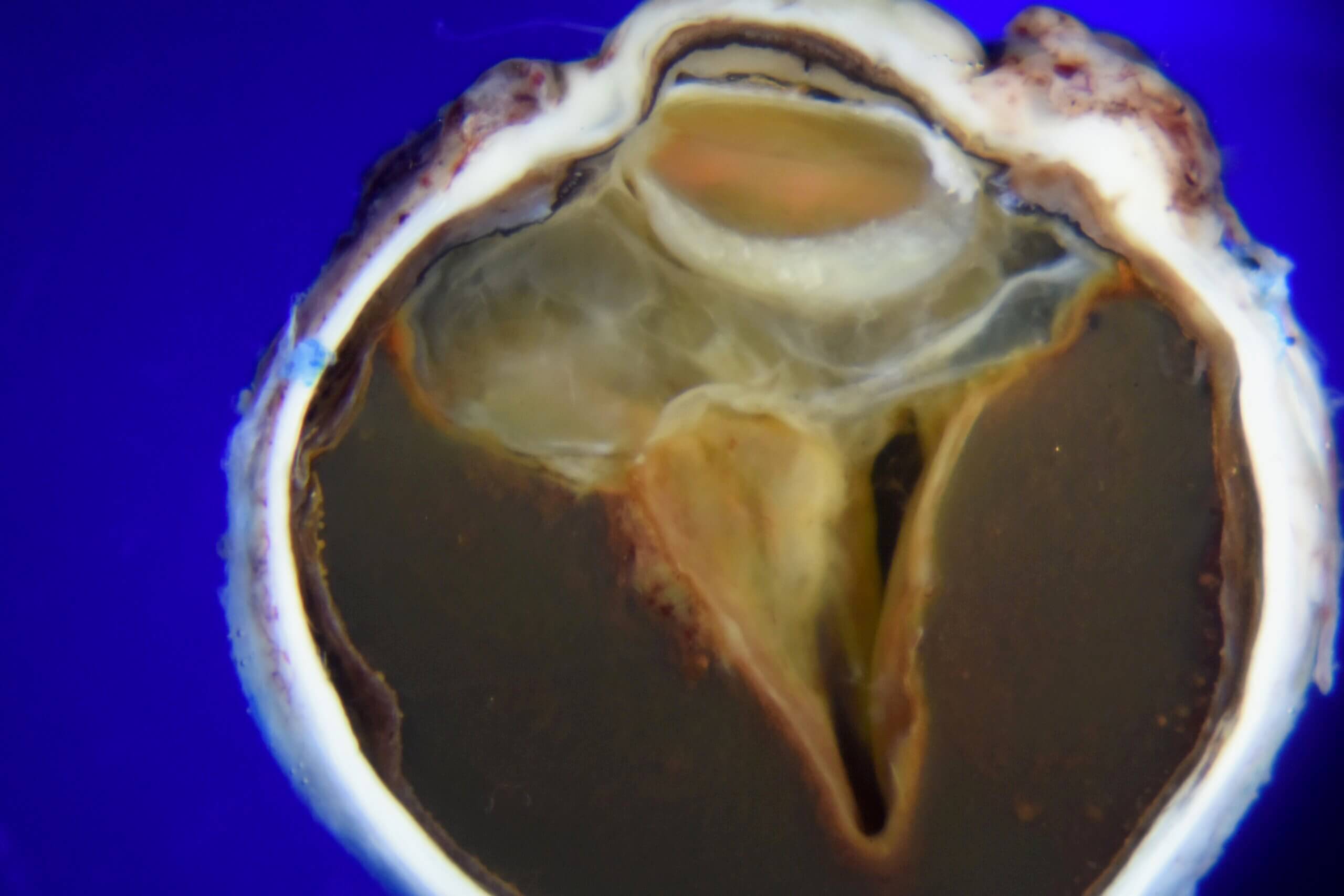
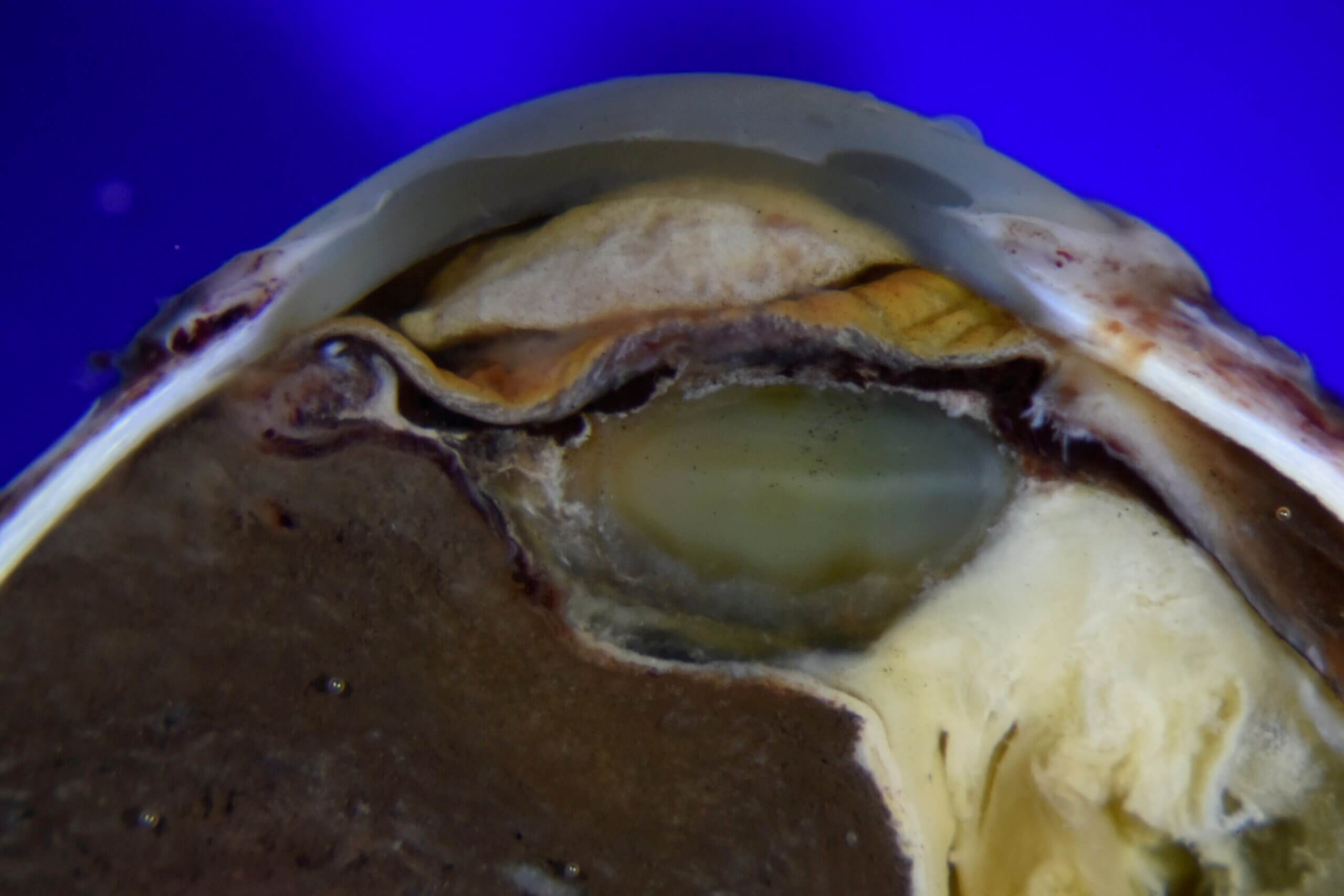
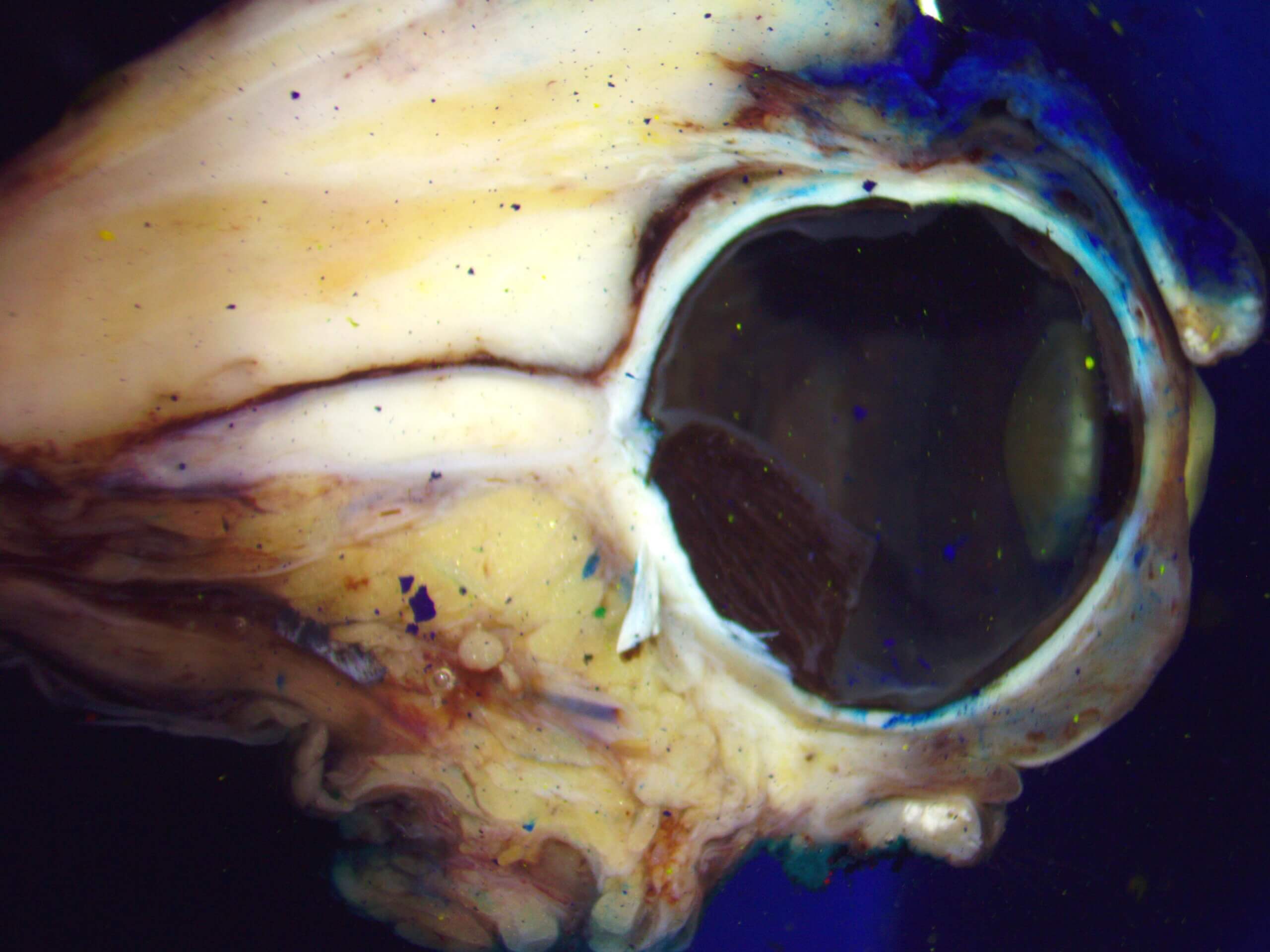
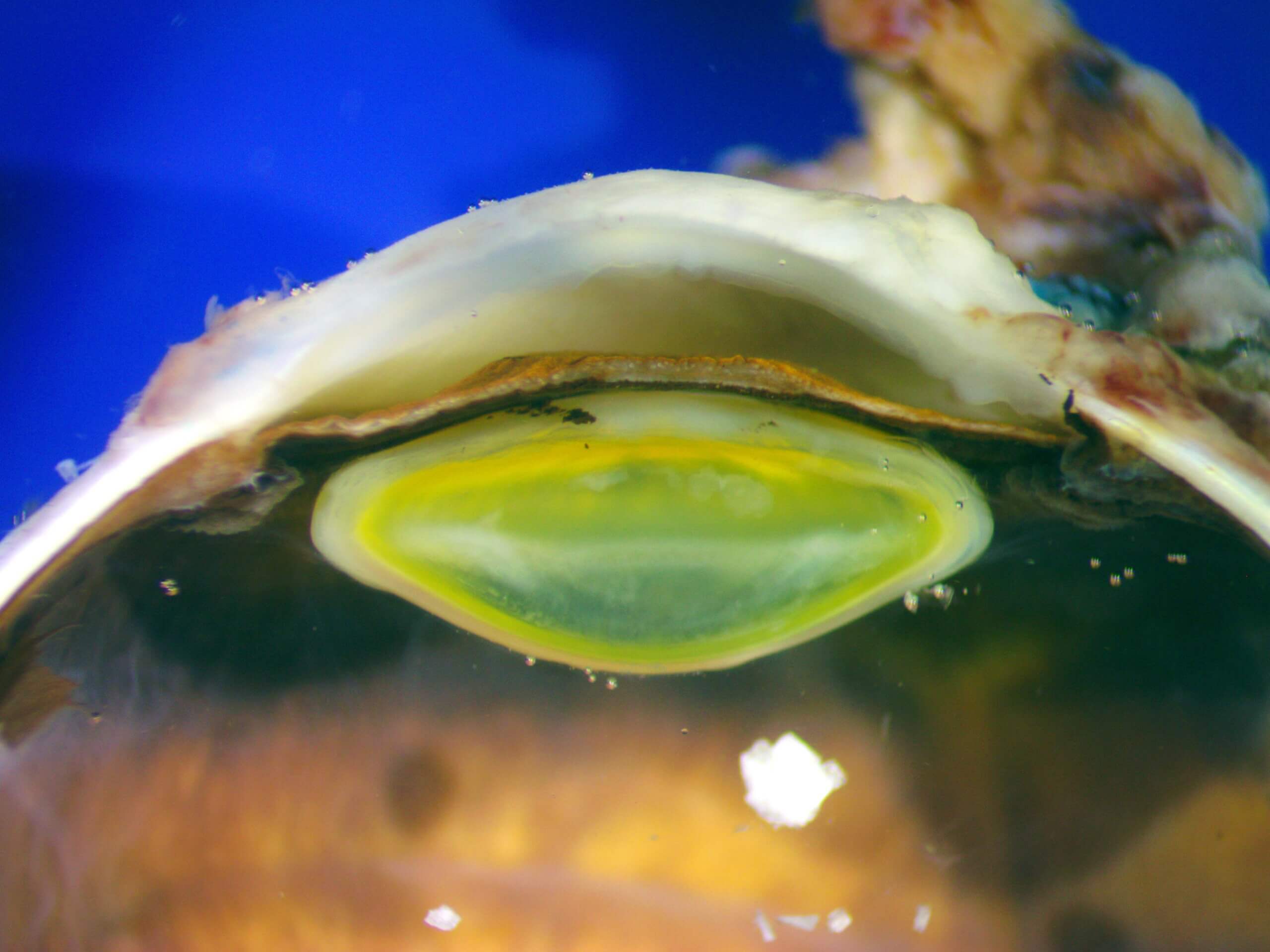
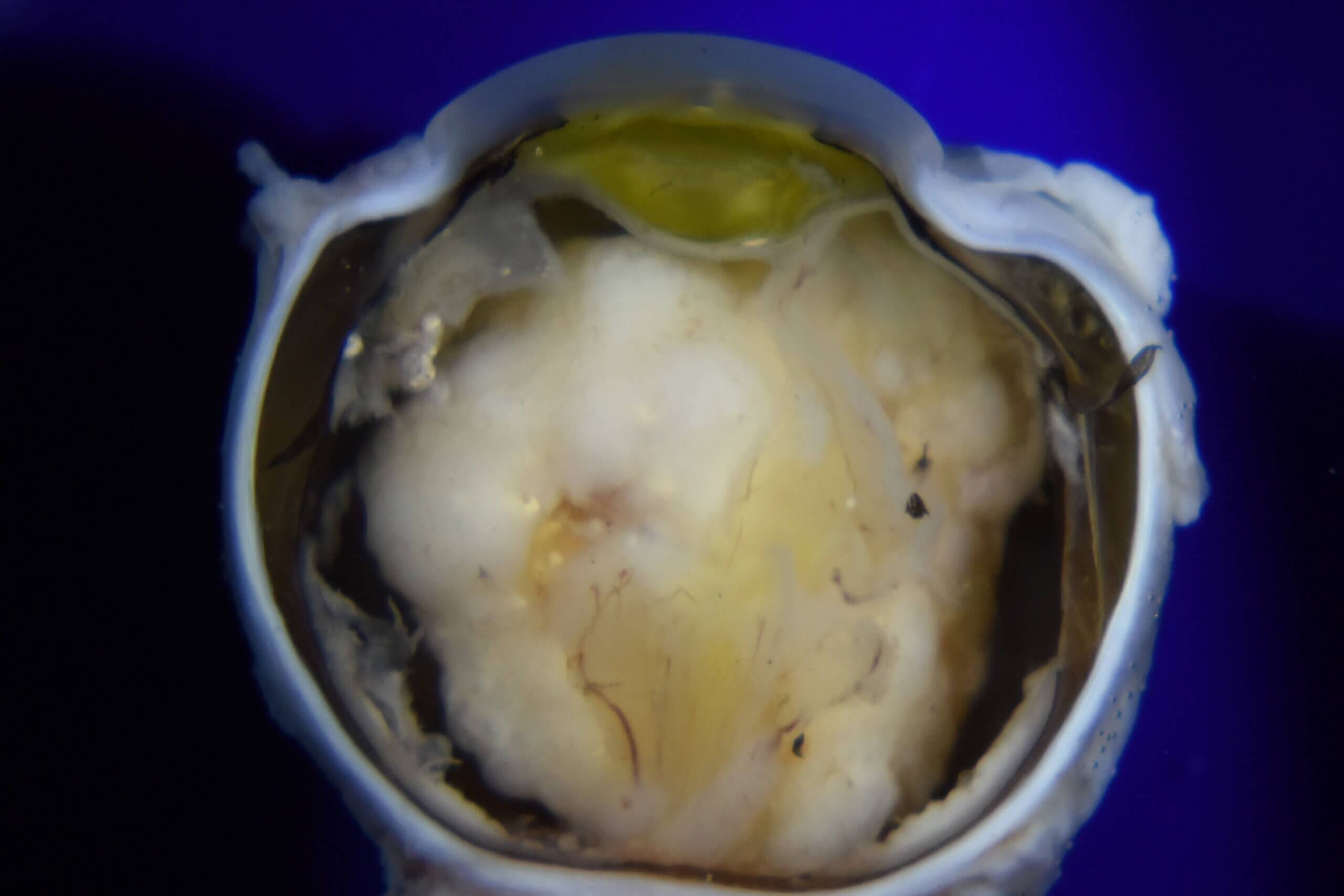
A 54-year-old male line worker presented to a community hospital after an arc flash from a malfunctioning powerline transformer (estimated 7,200-volt flash). He was a few feet from the transformer and wore recommended personal protective equipment, including industrial UV-tinted protective eyewear.
On ophthalmic consultation, he reported several minutes of severe blurring immediately after the flash, followed by persistent mild blurriness and burning eye pain OU. He reported a sandpaper sensation with eyelid closure that improved with proparacaine. He also had mild photophobia but no flashes, floaters or other vision symptoms.
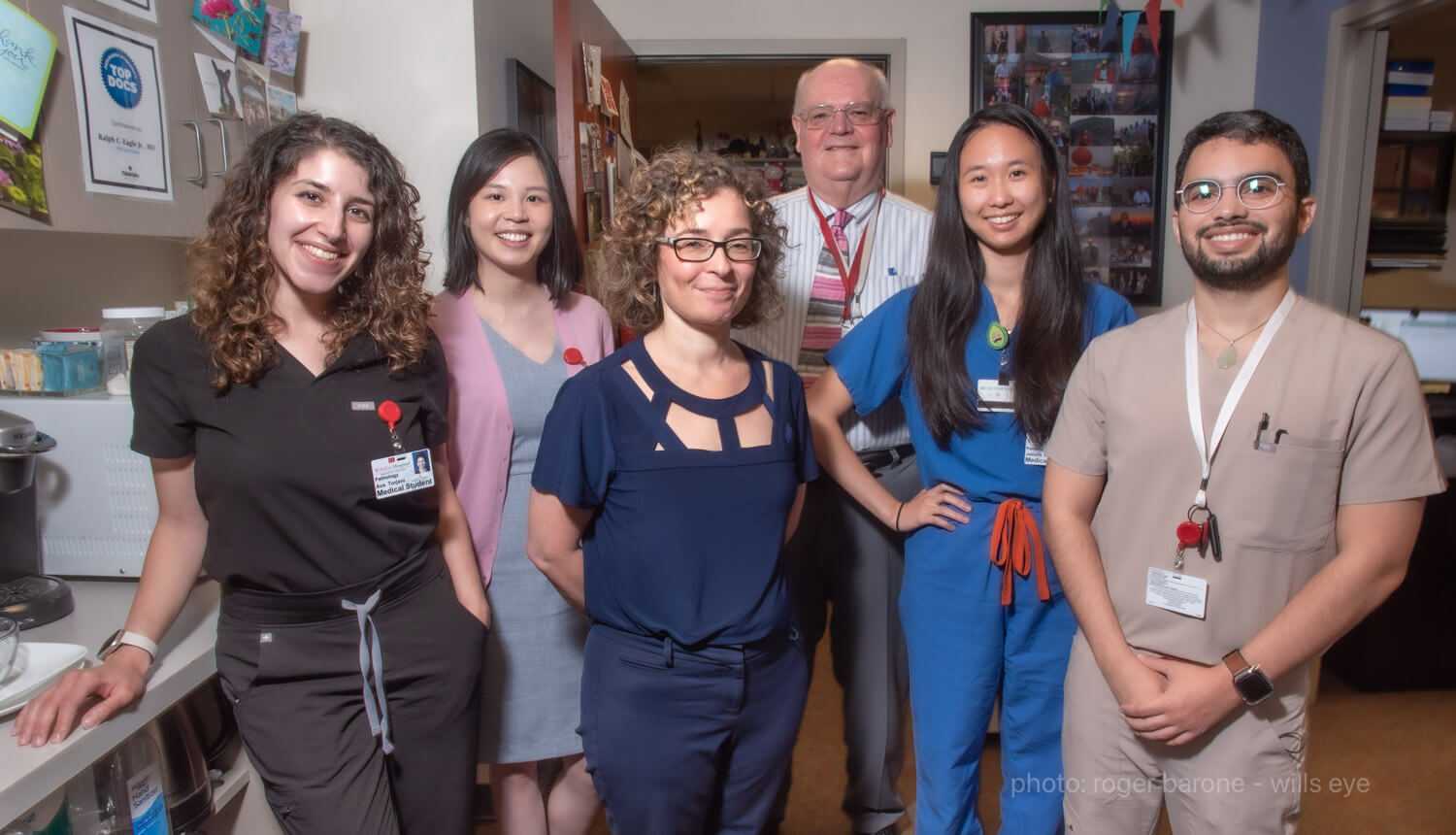
This month's image presented by:

Joseph DeSimone, MD
Nelle Shields, MD

Minjia Tang, MD
HSV dermatitis with associated keratitis
Representative histology shows epithelial cells with HSV cytopathic changes, including multinucleation, nuclear molding, and Cowdry type B inclusions with chromatin margination.


Explore our growing collection of educational videos created by pathology fellows, offering step-by-step guidance on proper handling, processing, and evaluation of ophthalmic specimens.
This resource is designed to support both training and practice in ophthalmic pathology.
Check back soon for the full video series.
List of providers who offer expert consultations in eye pathology.



Join the leading experts dedicated to advancing ocular pathology and ocular oncology.

The International Society of Ocular Oncology (ISOO) is a non-profit corporation with the specific and primary purpose to advance and promote the practice of ocular oncology. For information, click here.

The mission of the Ocular Oncology Service at Wills Eye Hospital is to provide the most skilled care for patients with ocular tumors and cancers in a compassionate way with the ultimate goal to save life and sight. For information, click here.

The American Association of Ophthalmic Oncologists and Pathologists (AAOOP) offers membership opportunities for trainees, ophthalmologists, and pathologists. For information, click here.

For additional information or comments, please contact:
Tatyana Milman, MD at:
tmilman@willseye.org