Cataract
Cataract is the term used to describe a clouding of the natural lens of the eye. This clouding of the lens is part of the normal aging process.
Call Us: 215-928-3300

If your doctor has informed you that you have a cataract, it is important to understand your diagnosis and your options. Nearly everyone will develop cataracts at some point. Cataract is the term used to describe a clouding of the natural lens of the eye. This clouding of the lens is part of the normal aging process. Cataracts most often start to cause a noticeable difference in vision after 60 years of age. However, the formation of a cataract can be accelerated by many other factors besides age. These factors include trauma to the eye, infection, previous eye surgery and certain medications. Rarely, an infant is born with cataracts. To understand how and why a cataract affects your vision, it may be helpful to understand the process of sight.
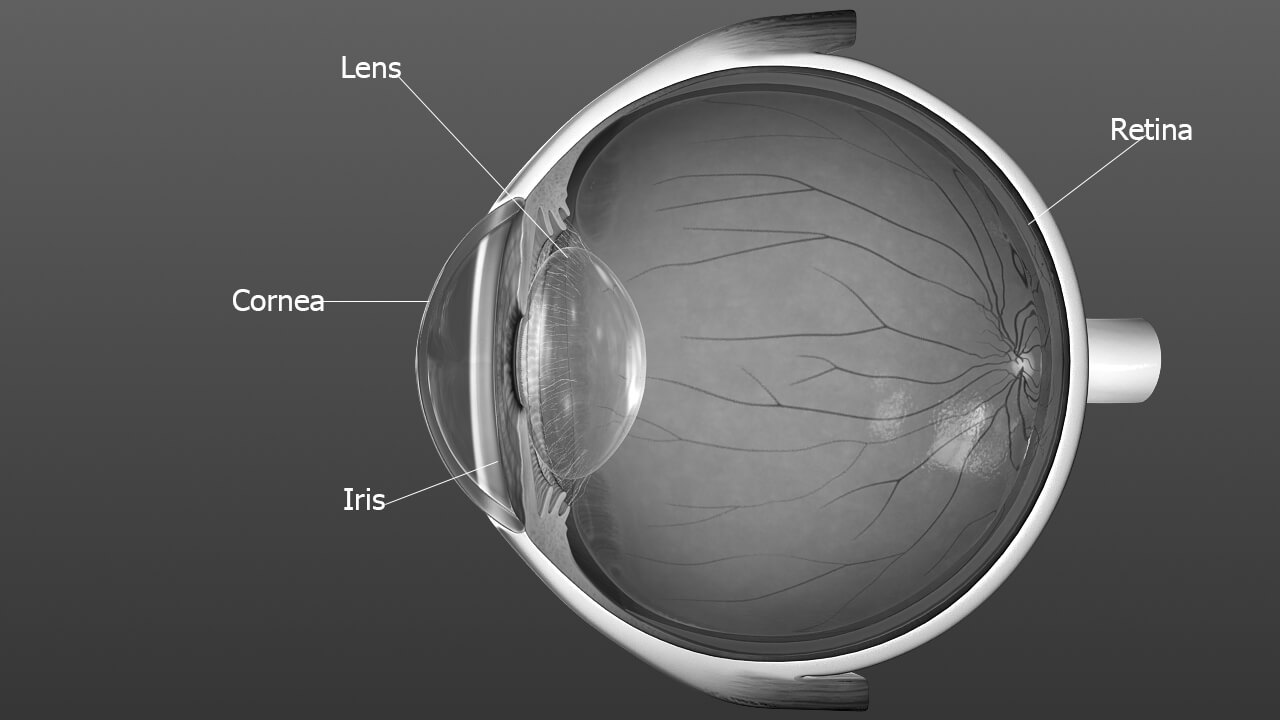
The diagram shows the structures of the eye. The cornea (the clear front window of the eye) and the lens (located behind the colored part of the eye) are responsible for refracting or focusing light on to the retina (the back of the eye). The retina contains nerve cells that transmit electrical impulses to the brain. The brain then interprets the image. Cataracts cause a decrease in vision because the cloudy lens does not allow light to pass through and be focused on the retina.
When we are young, the lens of the eye is flexible and clear. It can adjust or accommodate to allow us to see close or far away. At middle age, many people begin to notice difficulty with their reading vision. This is because the lens of the eye has stiffened and is no longer able to accommodate to see up close. As time goes on and the lens becomes cloudy, people may experience difficulty when driving at night due to glare from oncoming headlights. Decreased color perception as well as blurred vision for reading and seeing street signs may be experienced. Difficulty with other activities and a feeling that vision is just “not quite as sharp as it was” may also be symptoms of a cataract.

Some types of cataract develop quickly, others more slowly. A change in eyeglass prescription can sometimes improve vision but eventually the cataract reaches a point where changing the eyeglass prescription is no longer helpful. At that point, the only option to restore vision is to remove the cataract. Removing the cataract and replacing it with an intraocular lens implant (IOL) will remove the cloudiness and help restore the focusing power the eye had before the cataract formed.
CORTICAL CATARACTS
Many cataracts take years to develop to the point where vision is seriously affected. Most occur as a result of the normal aging process. The types of age-related cataracts are usually described by their location in the lens. They are: nuclear cataracts, cortical cataracts and subcapsular cataracts.
Nuclear cataracts occur in the center of the lens and may induce other eye problems, such as myopia. A cortical cataract, which tends to occur more in persons with diabetes, begins at the outer portion of the lens, then slowly moves inward. Subcapsular cataracts develops under the capsule, often at the back of the lens. This type of cataract also occurs more in persons with diabetes, but it is also found in persons with high myopia, adults with retinitis pigmentosa and in people who take steroids.